
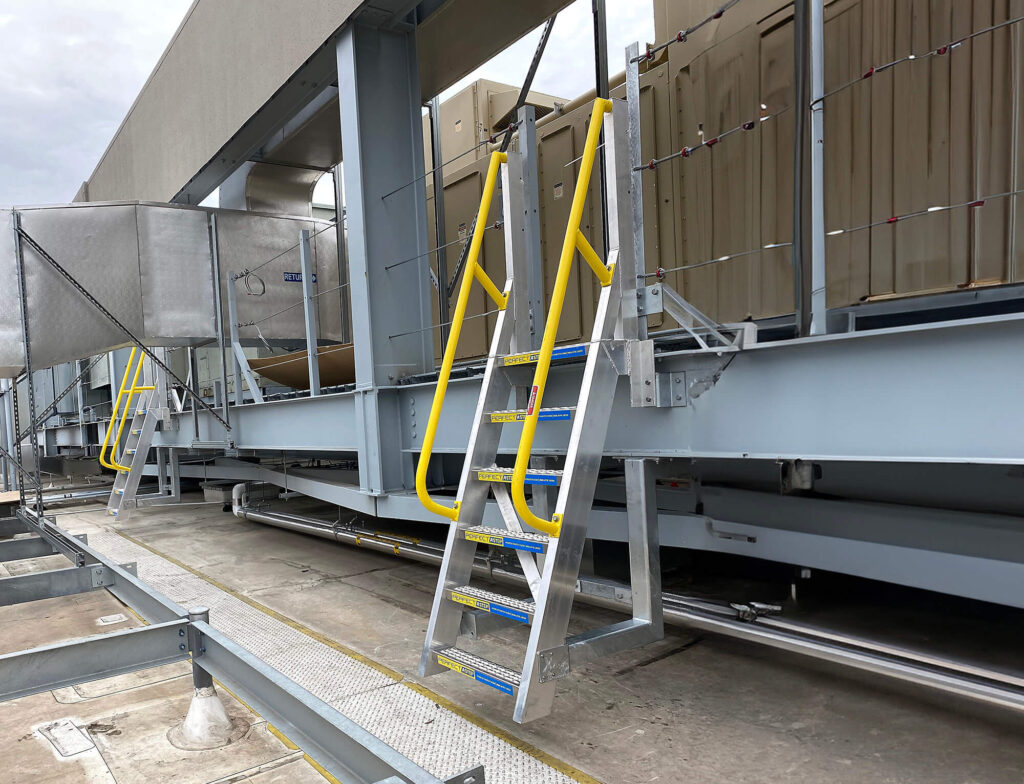
At first glance, a ship’s ladder can appear like a compromise—steeper than a staircase, more structured than a vertical ladder, and often tucked into spaces where neither of those options would comfortably fit. However, this hybrid form is not the result of cutting corners. Instead, it reflects a deliberate approach to access design, one that prioritises efficiency without losing sight of safety. In environments where space is limited but regular access is required, ships ladder design plays a crucial role in bridging the gap between practicality and usability, offering a solution that feels intentional rather than improvised.
The real strength of a ship’s ladder lies in how it responds to spatial constraints. In many buildings, particularly industrial sites, loft spaces, or compact commercial interiors, there simply isn’t enough room to install a full staircase with a gentle incline. A ship’s ladder, with its steeper angle, allows designers to make use of vertical space more effectively while still providing a stable and repeatable means of access. This is especially valuable in areas where equipment needs to be reached regularly, but where floor space must remain clear for other operations.
Angle is one of the defining characteristics of this type of ladder, and getting it right is essential. Too steep, and it begins to feel like a conventional ladder, increasing the physical effort required to climb. Too shallow, and it starts to demand more space, undermining its purpose. The typical range strikes a balance that allows users to maintain a natural rhythm when ascending or descending, often supported by well-positioned handrails that provide additional stability. This careful calibration of angle is what transforms the structure from a simple access point into a reliable, everyday feature.
Another key element is the design of the treads themselves. Unlike standard ladder rungs, ship’s ladders often incorporate wider, flatter steps that allow for more secure footing. This makes a noticeable difference in user confidence, particularly when carrying tools or equipment. The spacing between treads is also consistent, helping to create a predictable climbing experience that reduces the likelihood of missteps. These small but significant design choices contribute to a safer overall interaction with the ladder.
Material selection further enhances performance. Many ship’s ladders are constructed from durable metals such as steel or aluminium, chosen for their strength and ability to withstand repeated use. In environments where exposure to moisture or temperature fluctuations is a concern, corrosion-resistant finishes can extend the lifespan of the ladder while maintaining its structural integrity. The result is a solution that not only fits the space but continues to perform reliably over time.
Ultimately, the value of a ship’s ladder comes down to thoughtful design. It is not simply about fitting into a tight area, but about doing so in a way that respects how people move, work, and interact with their surroundings. When designed well, it becomes an unobtrusive yet essential part of the environment, proving that even steep solutions can feel intuitive when guided by the right principles.
