
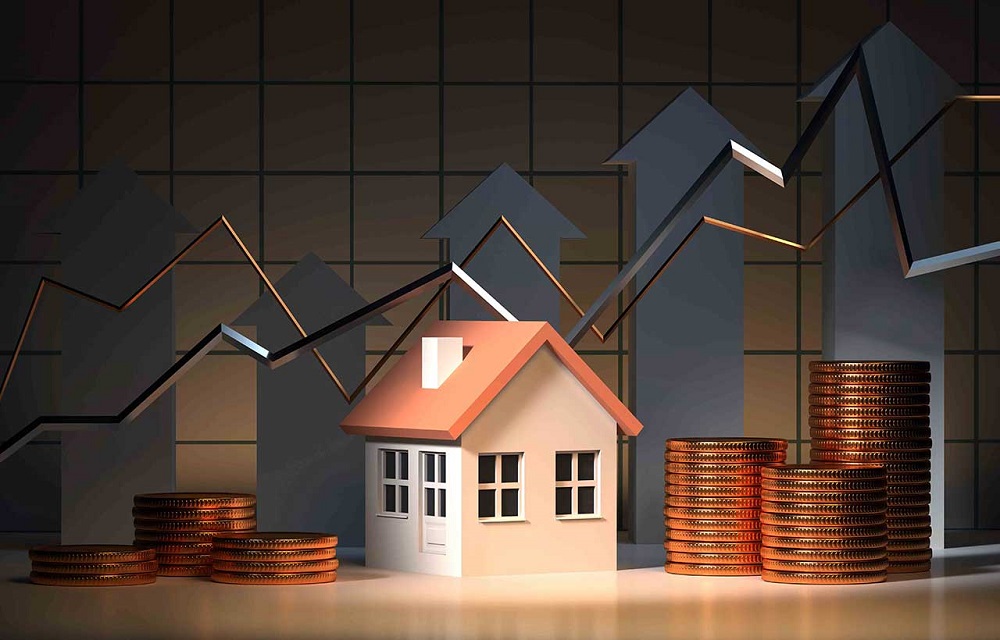
The real estate market is widely recognized as one of the most reliable indicators of structural macroeconomic health. Far from operating in isolation, property values, construction rates, and transaction volumes are deeply tethered to broader economic fluctuations. For developers, institutional investors, and individual homeowners, understanding the relationship between macroeconomic indicators and real estate is essential for protecting capital and maximizing long-term returns. Economic trends dictate the cost of borrowing, the financial capacity of consumers, and the overall demand for commercial and residential spaces. By examining the primary economic catalysts that steer property markets, stakeholders can better anticipate structural cyclical shifts and navigate market volatility with analytical precision.
Interest Rates and the Cost of Capital
Among all macroeconomic variables, interest rates exert the most immediate and profound leverage over real estate ecosystems. Central banks utilize benchmark interest rates as a primary tool to manage inflation and regulate economic expansion. When central banks adjust these rates, the ripple effects alter the capital structure of the entire real estate sector.
In a high-interest-rate environment, the cost of obtaining a mortgage increases significantly. Higher borrowing costs decrease consumer purchasing power, as a larger portion of a homebuyer’s monthly payment must be allocated toward servicing debt interest rather than reducing the principal loan balance. This structural shift often leads to a cooling period where residential transaction volumes contract, home price appreciation stalls, and properties remain listed on the market for extended durations.
Furthermore, elevated interest rates create what economists refer to as a lock-in effect, where current homeowners who secured historically low fixed mortgage rates choose to postpone listing their homes for sale. This reluctance to move severely constrains the supply of existing homes, creating an architectural market imbalance where tight inventory artificially supports property values despite diminished consumer affordability. Conversely, when central banks ease monetary policy and lower interest rates, borrowing becomes cheaper, injecting liquidity back into the market and igniting rapid home sales and pricing growth.
GDP Growth, Employment Dynamics, and Income Trajectories
Gross Domestic Product represents the aggregate economic output of a nation, and its trajectory is directly correlated with real estate demand. A expanding GDP signals robust corporate profitability, rising employment rates, and growing consumer confidence, all of which serve as major tailwinds for the property sector.
When employment metrics are strong, corporate organizations require physical expansion, driving down vacancy rates in commercial office buildings, distribution warehouses, and logistics hubs. Simultaneously, job security and wage growth empower individuals to transition from rental housing to equity-building homeownership. This influx of qualified buyers increases competition for residential listings, allowing construction firms to initiate new residential developments with high financial confidence.
During an economic downturn or recessionary phase, the opposite trend manifests. Corporate downsizing leads to lease terminations and a surplus of vacant commercial real estate. Rising unemployment diminishes consumer purchasing power, resulting in a spike in rental delinquencies and a contraction in mortgage originations. As consumer confidence wanes, discretionary spending drops, which directly undermines the performance of hospitality and retail real estate assets, forcing property owners to offer significant tenant incentives or lower rental rates to retain occupancy.
Inflationary Pressures and Construction Input Costs
Real estate is historically valued as a reliable hedge against inflation, but persistent inflationary trends introduce complex challenges to property development and acquisition. Inflation erodes currency purchasing power, driving up the costs of goods and services across the economy.
For the real estate sector, inflation impacts the supply side through the rising cost of construction inputs. Materials such as structural steel, concrete, lumber, and copper wiring experience price hikes during inflationary cycles. Coupled with rising specialized labor wages, the total capital expenditure required to deliver a new building increases dramatically. When development costs rise, homebuilders frequently slow down new construction pipelines or adjust initial floorplans to preserve profit margins, which slows the addition of fresh housing supply to the market.
On the investment side, inflation allows property owners to adjust rental agreements upward, particularly in sectors with short-term lease structures, such as multifamily residential apartments or hospitality assets. Because land and physical buildings are tangible, finite resources, their intrinsic asset value typically appreciates alongside rising consumer price indices over multi-year horizons, shielding investor capital from the wealth-eroding effects of unmitigated monetary inflation.
Demographics, Urbanization, and Migration Patterns
While financial and monetary policies control the transactional velocity of real estate, demographic shifts dictate its geographical trajectory. The composition of a population, including age distribution, household formation rates, and regional migration patterns, dictates what types of properties are needed and where they should be built.
The aging of a demographic cohort significantly alters real estate demand. For instance, as a large segment of the population enters retirement, demand increases for senior living facilities, accessible low-maintenance condominiums, and healthcare-anchored real estate assets. Simultaneously, younger generations delaying marriage or prioritizing career mobility drives sustained demand for urban multifamily apartments and flexible, co-living rental structures.
Geographical migration patterns, often catalyzed by regional economic opportunities or tax policies, create localized real estate booms and corrections. When corporate entities relocate headquarters to business-friendly states, a massive influx of workforce talent follows. This rapid population transfer triggers an immediate shortage of localized housing, causing a sharp increase in residential rental rates and land values in destination cities. Meanwhile, the regions experiencing population outflows suffer from prolonged market stagnation, forcing property owners to adapt by converting older, underutilized spaces into alternative assets like data centers or modernized mixed-use facilities.
The Influence of Consumer Confidence and Market Sentiment
Real estate markets are highly psychological, relying heavily on the subjective sentiment of consumers and institutional investors. Economic indicators can be numerically favorable, but if the public perceives future economic instability, market activity will decelerate.
Consumer confidence reflects how secure individuals feel about their personal financial prospects over the short-to-medium term. Buying real estate represents a long-term financial commitment, typically requiring a multi-decade mortgage contract. If consumer sentiment indices drop due to geopolitical tensions, media reports of impending economic cooling, or stock market volatility, households will naturally postpone major capital expenditures, choosing to build emergency cash reserves instead of executing property down payments.
For commercial real estate investors, market sentiment is measured through capitalization rates, which indicate the expected rate of return on a real estate investment property. When investor sentiment is optimistic, capital flows aggressively into real estate, lowering capitalization rates and driving property valuations upward. If market sentiment turns risk-averse, institutional investors demand higher risk premiums, pulling capital out of speculative real estate projects and redirecting it into low-risk government bonds, which forces commercial real estate values to adjust downward to attract buyers.
Frequently Asked Questions
How does the performance of the stock market affect real estate valuations?
The stock market and real estate market are interconnected through a financial phenomenon known as the wealth effect. When equity markets experience a sustained bull market, investors witness their portfolios expand, creating perceived wealth that encourages them to diversify capital into tangible real estate assets, luxury second homes, or commercial developments. Conversely, a sharp stock market contraction reduces liquid wealth and corporate capital reserves, often causing prospective buyers to pull out of real estate transactions to preserve cash.
Why do commercial real estate markets react differently to economic trends compared to residential markets?
Commercial real estate relies heavily on long-term corporate lease structures, which can span anywhere from five to fifteen years. This contractual longevity creates an operational buffer, meaning commercial property revenues may remain stable during the initial stages of an economic downturn. Residential real estate, conversely, features shorter lease terms or direct owner-occupant transactions, making it highly sensitive to immediate shifts in consumer interest rates, daily employment numbers, and monthly affordability indexes.
What role does the inventory-to-sales ratio play during economic transitions?
The inventory-to-sales ratio measures how long current property listings would sustain existing consumer demand if no new homes were added to the market. During an economic expansion, high buyer demand lowers this ratio, establishing a seller’s market where low supply drives up home prices. During an economic contraction, diminished buyer demand causes inventory to accumulate, raising the ratio and transitioning the ecosystem into a buyer’s market where sellers must lower prices or offer concessions to execute transactions.
How do global supply chain disruptions impact local real estate development?
Global supply chain disruptions directly delay construction timelines and inflate project budgets by restricting access to vital raw materials and mechanical equipment, such as HVAC units, industrial elevators, and electrical transformers. When contractors face unpredictable material delivery schedules, project financing costs increase due to extended loan interest accumulation, which ultimately reduces the volume of new property completions and limits available inventory in the local market.
What is the relationship between property taxes and shifting real estate market trends?
Property taxes are typically determined by local municipal valuations to fund public infrastructure and education systems. In areas where rapid economic growth drives property values upward, subsequent property tax increases can place a heavy financial strain on fixed-income homeowners and commercial tenants with triple-net lease structures. If tax rates rise too aggressively, they can eventually diminish local affordability, cooling home demand and prompting investors to seek out alternative jurisdictions with lower tax burdens.
How do government fiscal incentives alter real estate cycles during a slowdown?
During an economic slowdown, governments frequently introduce fiscal incentives, such as first-time homebuyer tax credits, reduced capital gains taxes on property sales, or subsidized interest rate programs for affordable housing initiatives. These targeted policy interventions artificially stimulate transaction velocity by lowering the financial barrier to entry, successfully mitigating deep real estate corrections and stabilizing construction employment until the broader macroeconomic framework recovers naturally.
